

The Architecture Establishment Won’t Save the Profession
In a time of profound economic uncertainty, social upheaval, and political unrest, our leaders are nowhere to be seen - change is up to us.

.jpg)
I wasn’t planning on writing another “topical news story” post this week. There’s a lot I’m eager to write about regarding AI, craft, and a host of other important issues our discipline and society are wrestling with. But once again the architecture establishment has shown us its complete detachment from reality. Or maybe it’s complete acquiescence to it.
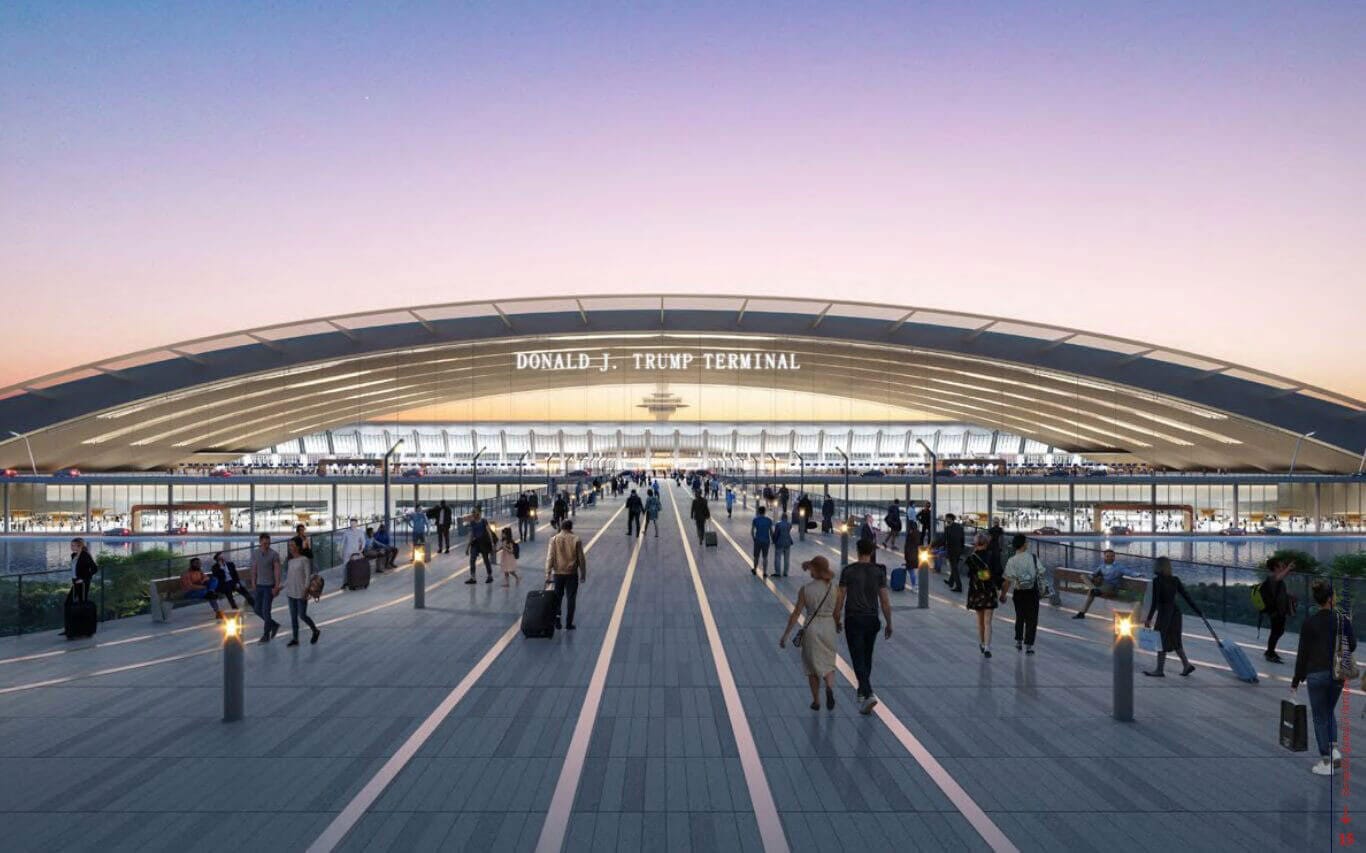
On Monday, the Architect’s Newspaper shared news that prominent firms including Zaha Hadid Architects, Adjaye Associates, AECOM, and Grimshaw submitted proposals to a U.S. Department of Transportation RFI (Request for Information Responses) for a new terminal at Dulles Airport that will be named after Donald Trump. (On a side note, Dan Roche and the AN have been doing some excellent reporting lately, including on the Snøhetta story and others related to the work of AWU).
Seemingly unaware that the administration is currently terrorizing immigrants and citizens alike, with at least 32 dying in custody in addition to those recently murdered in broad daylight, these firms have chosen to look the other way and pursue profit over any sense of ethics or morals, designing a building that honors the person behind the chaos. Sleek renderings (soon to be generated by AI) show clueless travelers shopping at Chanel and Ralph Lauren, the most anemic expression of a narrow world-view possible through the architectural imagination.
It’s another blow to those of us who care about what is going on beyond our profession, or even simply improving our own deteriorating conditions. But the trend is clear: as we saw with the tech companies who bent their knees the minute Trump was elected, the kinds of architecture practices that have developed in the post-war period have no ability, ironically, to respond to fascism in any other way than capitulation. While the tide might be changing ever so slightly, their true colors have been on display for the past year. There is only one motivation: profit.
Just like said tech companies, many architecture firms followed the way the wind was blowing during the George Floyd protests and issued tepid statements of support for their employees’ calls of taking serious growing DEI efforts. Four years later, it’s difficult to see any remnants of such progressive thinking, and the facade has dropped. The Dulles Airport competition all but assures us that the book is closed for our supposed leaders. Back to chasing commissions without all the performative displays; I’m sure they’re relieved.
So what is to be done?
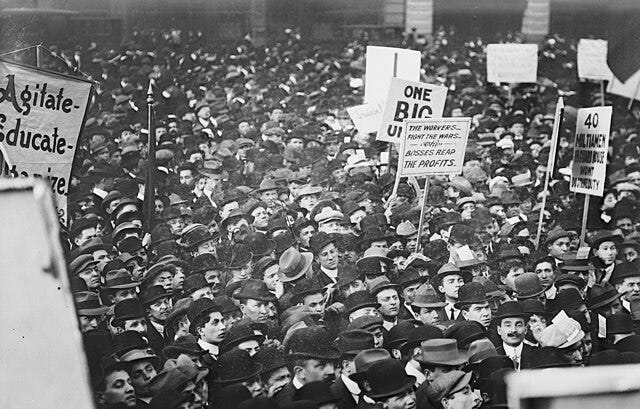
Something that happened last week gives us direction in navigating these uncertain times. Uniting its various constituent members, the AFL-CIO joined other community organizations to hold the first general strike in decades. Though it was only one day, it’s a massive development, in two ways: first, that the labor movement is waking from its long slumber to create a massive mobilization of workers, and 2) that the general public is raising its class consciousness through an understanding that one of the most effective ways of undermining authoritarian governments is by withholding from it both labor and capital.
This idea is quickly becoming popular, with actors and other media figures who represent the highest elements of elite circles echoing the call for a national strike. We haven’t seen this level of broad popular support for the idea in at least a generation. In addition to another strike happening today, keep an eye on 2028; the UAW’s Shawn Fain has been coordinating contracts across the country to end on May Day of that year, paving the way for a real general strike.
For architects and designers, we should be ready to also heed the call of the general strike. If it is possible to avoid work, that is the best option. But this is not always possible for workers. Other actions can include a spending freeze on corporations (the surest way to get the current administration to panic is through the stock market), continued mobilization on the streets (something architects are shy to do), and longer scale projects of forming other networks of solidarity (re: unions). As Gene Sharp describes in From Dictatorship to Democracy, a sadly relevant text for the current state of America, “a strategy has been compared to the artist’s concept, while a strategic plan is the architect’s blueprint.”
This latter point is our focus at Architectural Workers United. We’re organizing several offices in order to help these workers not only improve their working conditions, but bring democracy to the workplace and the discipline at large. Admittedly though, designers are often a bit perplexed when we first share this idea with them.
But as they begin the work of organizing, including having discussions with coworkers about what isn’t functioning, they begin to realize that their workplace is anything but democratic. In fact, it appears more like a (sometimes benevolent) dictatorship, with one or a small handful of people making the decisions that affect working conditions for all. It’s especially surprising when they begin to realize that this is how the entire profession is “organized.”
Sound familiar? No doubt there is a connection between the decline of participation in unions and the correlative decline in democracy on a national level. When people are isolated in the workplace, they are in turn isolated from their community and society. In addition to the traditional wage struggles, as political scientist Robert Putnam observed, unions were an integral part of the social fabric that has since frayed; we’re not just bowling alone, but working, and struggling, alone. It’s a reminder that while our immediate problems are indeed pressing, and we should engage them in the ways mentioned above and beyond, we also need to keep the long game in mind.
The erosion of labor unions in the United States was no accident. As the late Jane MacAlevey argues, this has been a designed, systemic attack on workers rights orchestrated by a small group of corporate actors and conservative activists. If we want to address the deepest illnesses within our democracy, it starts by building alternative spaces of expression like unions.
The road is long, but by building a workers movement within not just architecture, but all sectors, we will set ourselves up well to create local and national organizations and governments that reflect the will of everyday people. Though not perfect, labor friendly states like New York, Massachusetts and Hawaii are a testament to the power of labor to shape better societies in contrast to their “right-to-work” counterparts.
Getting architectural workers to see this is challenging. They’ve been trained in ways to focus on issues only related immediately to design, with courses and professional organizations that do their hardest to keep the blinders on while they toil away in studios run by the narrowest of interest. Which is exactly how we get to the point that some of the most prominent architectural firms in the world gladly respond to requests to design an airport named for the least democratic president in our lifetime.
I wish I could write about something else this week. But the reality is we live in a moment of profound change, and while things feel precarious, with that uncertainty brings the reality that the future is up for grabs. I know myself and the majority of architectural workers, the folks I talk to every week, want nothing other than to make the world around them a little better. But we should also continue to pressure those in power, both nationally and within all of our individual disciplines.
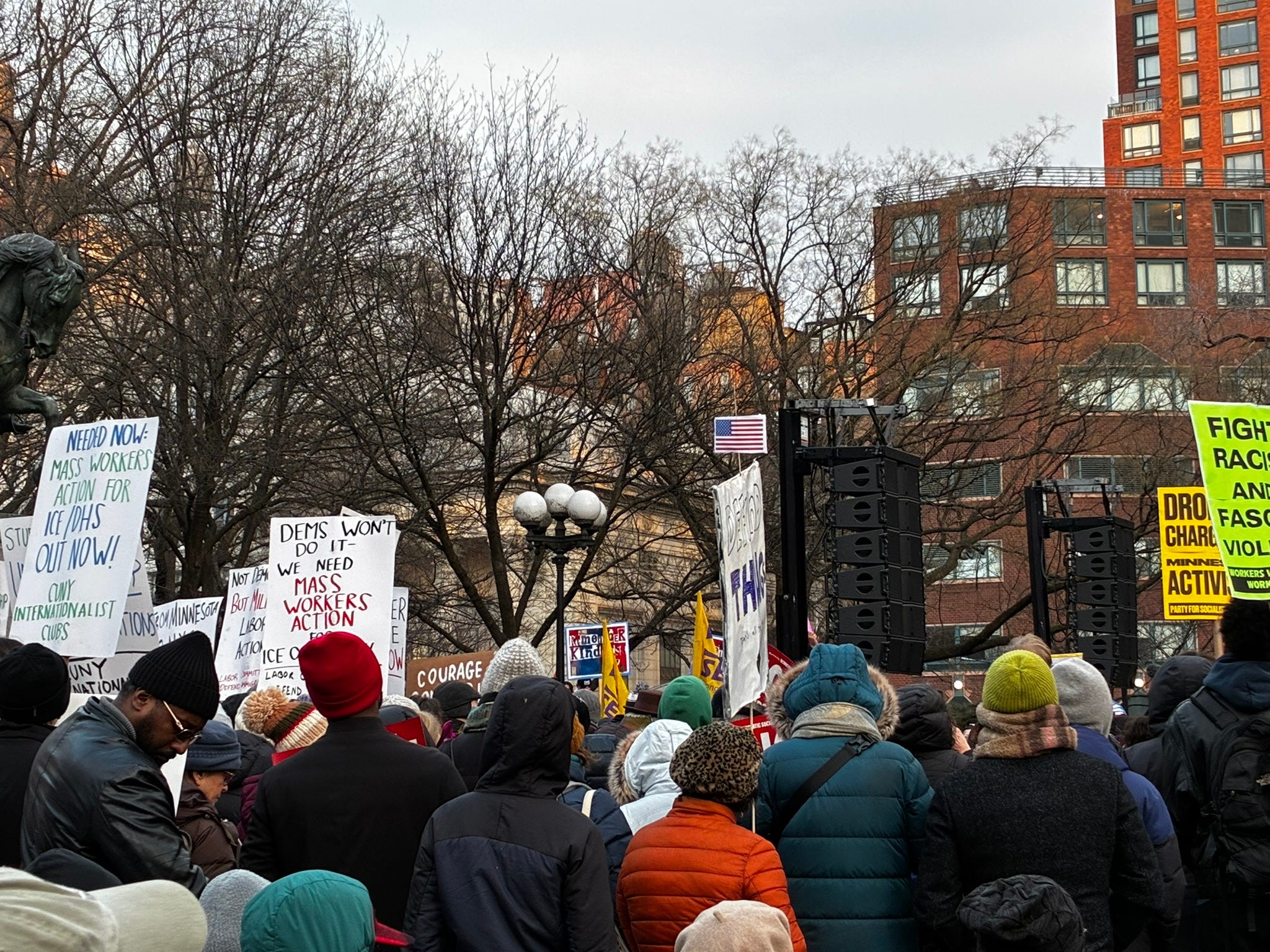
If anything, the past decade has taught us that the establishment isn’t going to save us. This is especially true in a discipline built on myths like the “creative genius.” Even when those who promise change come to power, when their work is built on the cult of individualism and personality they tend to fall into the same rhythms of stagnation and corruption. On the rare occasion that a real public servant like Zohran Mamdani arises, it is still on us to answer his call to continue the work of politics by attending rallies and pressuring elected officials and others in power to answer to us, the people.
In this moment, we have the opportunity to build powerful alternative democratic structures. With it we can elevate those to leadership who represent the interests of workers in architecture and beyond, for the betterment of our profession and the society it serves. While what I write here is my own opinion, I know from the work that I do that a large number of workers are exasperated by the direction of their profession, a direction undetermined by them - for now. Talking to workers who are organizing, I have a feeling many are done waiting for change; whether they know it or not, their actions today are shaping a more democratic future for everyone.
True across the board: cowards should be shunned; minimally decent people acting embraced.